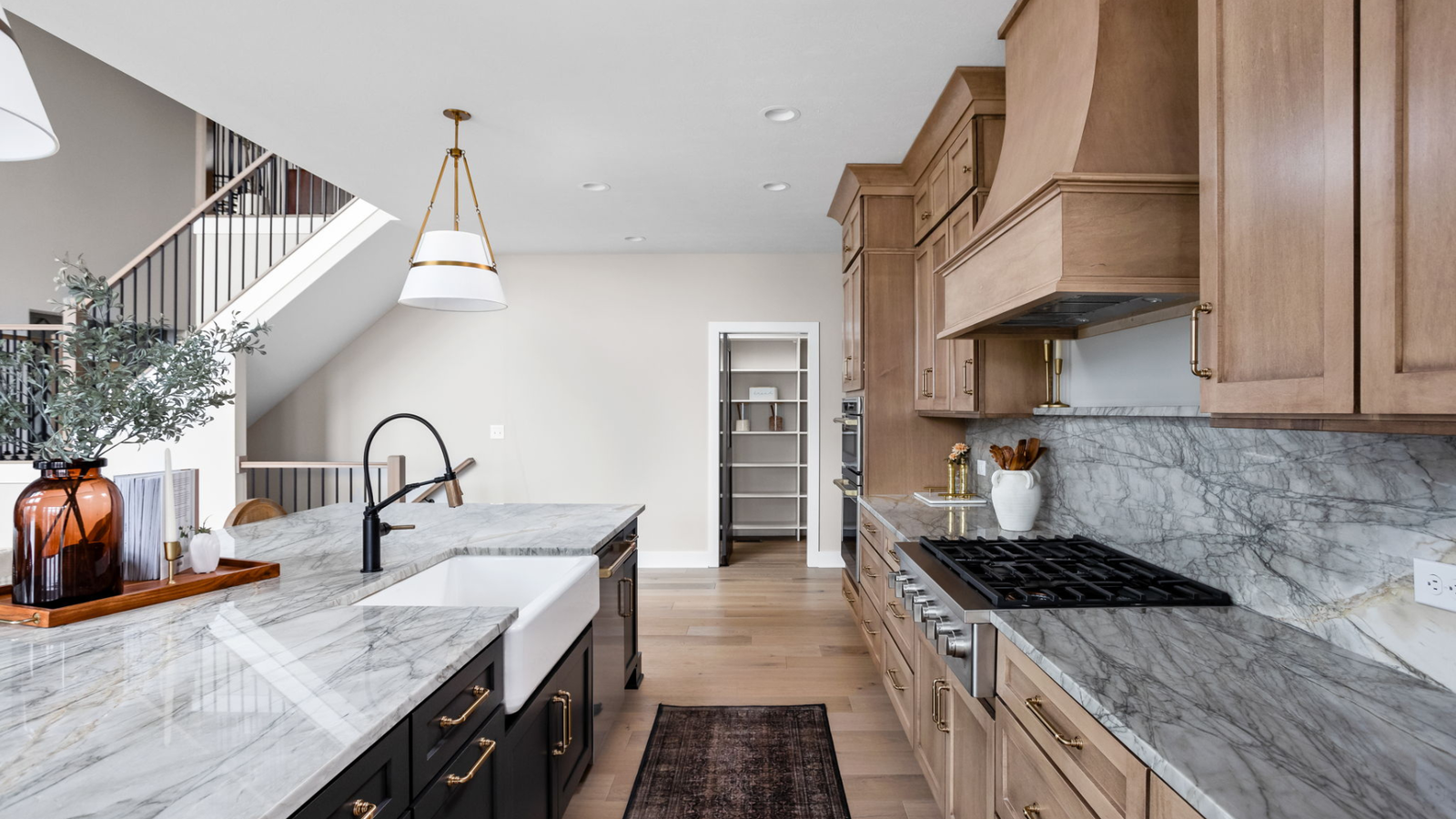
You’ve found a house in the right area. It has enough bedrooms. The yard is close to what you wanted. You could picture your family living there. But you’d change the kitchen. And probably the primary bathroom. You wish the garage were bigger. The basement needs work. The floor plan isn’t quite how you’d design it. Before long, you’re adding the purchase price to a growing renovation budget and asking yourself a completely different question:
Is it cheaper to build or buy a house in 2026?
The answer isn’t as simple as comparing the price of an existing home with the estimated cost of new construction. In some situations, buying is the more affordable option. In others, building a custom home gives you considerably more control over where your money goes. At DiYanni Homes, we’ve been building custom homes since 1979. One of the biggest things we encourage you to consider is the total investment—not simply the number attached to the house. Here’s how to make a meaningful build-versus-buy comparison in today’s housing market.
Is It Cheaper to Build or Buy a House?
Buying an existing house is often cheaper and faster upfront, but that doesn't necessarily make it less expensive over the long term. Building a custom home requires you to account for the home, land, site improvements, financing, and construction timeline, but it also gives you a brand-new home designed around your priorities. That distinction is particularly relevant in 2026. The national median existing-home sales price reached $434,100 in July 2026, 2% higher than a year earlier. At the same time, the number of existing homes available for sale stood at 1.54 million, representing a 4.6-month supply.
For comparison, the U.S. Census Bureau reported that the median price of a new home sold in June 2026 was $398,300. There were 485,000 new homes available for sale, representing a 9.3-month supply at the current sales pace. View the latest U.S. Census Bureau New Residential Sales report
Those national figures are useful context, but they don't mean that building a fully custom home costs less than buying an existing home. Census new-home data includes a wide range of builder-produced housing and is fundamentally different from pricing a one-of-a-kind custom home on your land. The better question is: What will you have spent by the time you have the home you actually want?
What Does It Really Cost to Buy a House?
The purchase price is only your starting point. When you buy an existing house, your total investment can include the down payment, closing costs, inspections, moving expenses, immediate repairs, renovations, and future maintenance. A house that is truly move-in ready could make buying a new home the obvious choice.
But consider another scenario. You buy a home knowing you want to remodel the kitchen. The bathrooms are 20 years old. You'd like to finish the basement. The HVAC system still works, but you know it won't last forever. The windows are aging, and the roof has another five or ten years before replacement becomes a serious conversation. None of those things automatically make the home a bad purchase.
They simply belong in your cost comparison. If a $400,000 house needs another $100,000 of work to become the house you want, you're not really comparing a $400,000 existing home with a $500,000 new home anymore. You're comparing what each path ultimately gives you for the money.
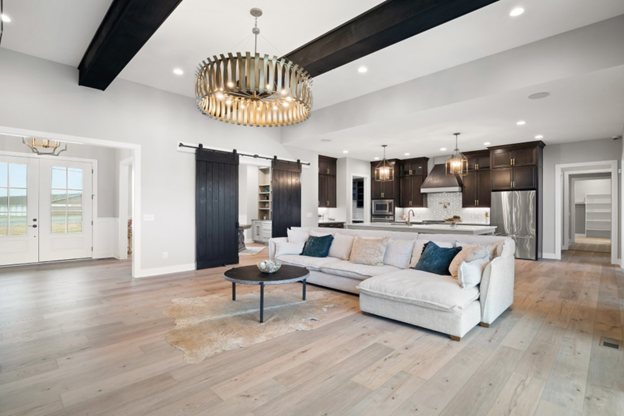
This is where the comparison gets more complicated. At DiYanni Homes, we encourage homeowners to think about a custom home investment in three separate categories: The home. The land. The land improvements. The home is the structure itself—the "sticks and bricks." The land is the property you're purchasing or already own. Land improvements include the work required to make that property ready for your home, which can include a driveway, grading, utilities, septic system, well, drainage, clearing, and other site-specific expenses.
Separating those costs gives you a much clearer picture of where your money is going. Our 2026 guide to how much it costs to build a house provides much more detail, but DiYanni's current home-only averages generally fall into these ranges:
Ranch homes between 2,000 and 2,700 square feet: approximately $225–$250 per square foot.
Ranch homes larger than 2,700 square feet: approximately $195–$220 per square foot.
Two-story homes with the primary bedroom upstairs between 2,000 and 2,700 square feet: approximately $190–$200 per square foot.
Two-story homes larger than 2,700 square feet with the primary bedroom upstairs: approximately $180–$190 per square foot.
Two-story homes with a first-floor primary bedroom between 2,000 and 2,700 square feet: approximately $220–$245 per square foot.
Larger two-story homes with a first-floor primary bedroom: approximately $190–$200 per square foot. These are home-only averages, not quotes or total project costs. Your architecture, selections, garage, porches, roofline, windows, land, and site conditions can move your actual cost in either direction.
Why Does Building a New Home Cost What It Does?
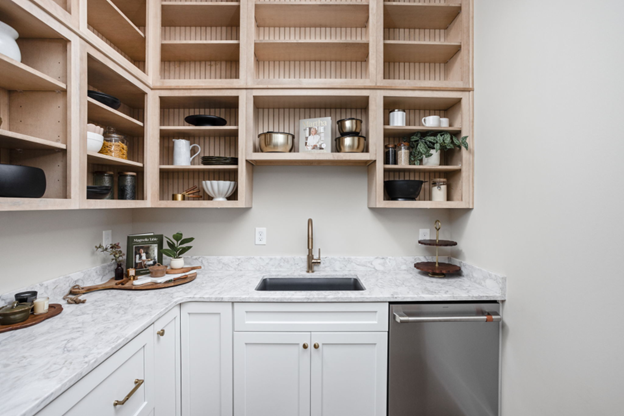
Construction costs remain a major component of new-home pricing. The National Association of Home Builders' latest Cost of Construction Survey found that construction accounted for 64.4% of the average new home's sales price in 2024, the highest share recorded since the organization began the survey in 1998. The finished lot accounted for another 13.7%. Materials and labor matter, but so does what you're actually putting into the house. Two builders can quote a similar-sized home at very different prices because they aren't necessarily building the same home.
Look closely at cabinetry. Flooring. Windows. Trim. Structural engineering. Hardware. Warranty coverage. Standard selections. Even the number of colors and finishes available without an upgrade. DiYanni Homes publishes its included features because we want you to understand what you're purchasing before you reach the selection process. A lower starting price loses some of its appeal if getting the finishes and quality you expected requires tens of thousands of dollars in upgrades later.
Buying Is Often Cheaper When You Find the Right House
There are plenty of situations where buying makes more financial sense. Maybe you find an existing home with the layout you want in your preferred neighborhood. The major systems are relatively new. You like the finishes. The inspection reveals no significant concerns, and you aren't planning major renovations.
In that situation, why build simply for the sake of building? Buying also has a significant advantage if time is your priority. A custom DiYanni home generally involves approximately five to six months of planning and pre-construction followed by around eight months of active construction. You can learn more about that process in our guide to how long it takes to build a house. An existing home can potentially have you moved in within weeks. If speed and upfront cost matter more to you than customization, buying deserves serious consideration.
Building Makes More Sense When You're Tired of Compromising
Now consider the opposite situation. You've toured house after house. One has the acreage but not the layout. Another has a beautiful kitchen but no first-floor primary suite. One has enough bedrooms but not enough garage space. Another is in exactly the right area, but you'd need to renovate half of it. At some point, buying a house and changing everything about it becomes a different financial proposition. A custom home lets you begin with your priorities.
You can choose the property. Position the home to take advantage of the land. Modify one of our custom home floor plans or develop something entirely new. Instead of paying for a kitchen and then paying to replace it, you choose the kitchen from the beginning. Instead of buying a three-car garage and adding a fourth bay later, you design what you need now.
Instead of trying to turn a traditional floor plan into a home for several generations, you can create a multigenerational home around privacy and connection from day one. That doesn't necessarily make building "cheaper." It can make the money you're spending work harder for the life you actually want.
Don't Forget the Cost of Renovating an Existing Home
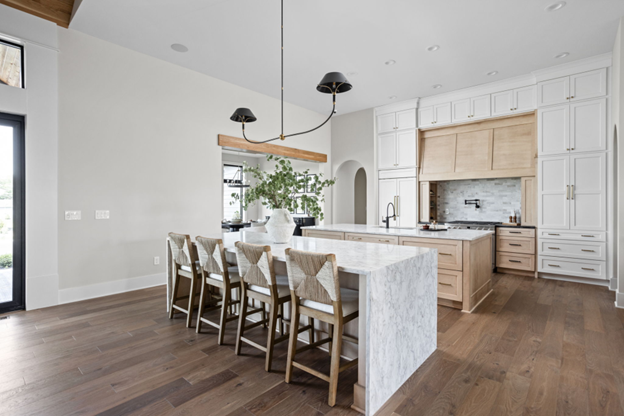
This is one of the biggest holes in many build-versus-buy comparisons. If you're considering an existing home, write down what you would realistically change during the first five years. Maybe it's a $60,000 kitchen remodel. Maybe you want to open a load-bearing wall, reconfigure the primary suite, add a bathroom, finish a basement, or build a substantial addition. There are also projects you don't choose. An aging roof, furnace, air conditioner, water heater, or window package eventually becomes an ownership expense.
With new construction, those systems start new, and warranties provide another layer of protection. DiYanni Homes, for example, includes a 30-year transferable structural warranty along with other manufacturers and product warranties. That doesn't mean a new home is maintenance-free. No house is. It means you begin ownership at a very different point in the lifecycle of the home's major components.
What About Energy Costs?
Energy efficiency is another long-term consideration that doesn't show up in the sale price. A newly built home is constructed under current energy and building standards and gives you the opportunity to incorporate modern insulation, windows, HVAC equipment, lighting, and other systems from the beginning.
An existing home could already be extremely efficient, particularly if previous owners made substantial improvements. An older house could require additional investment to reach the same level. When you're comparing homes, ask about insulation, window age, HVAC age and efficiency, air sealing, and utility history rather than assuming new or old automatically means efficient or inefficient.
Mortgage Rates Affect Both Decisions
The cost of financing also matters enormously in 2026. As of August 13, 2026, the average U.S. 30-year fixed mortgage rate was 6.67%, according to Freddie Mac data reported Thursday. At those rates, small differences in the amount financed can create meaningful differences in monthly payments and total interest.
Building also involves a different financing process. Custom homes are commonly financed with construction loans that release funds as construction progresses. Depending on the product, that loan may convert to permanent mortgage financing after completion. If you're considering building, read our guide to custom home construction loan requirements before comparing financing options.
Is It Cheaper to Build if You Already Own Land?
This is where building can become especially interesting. If you already own a suitable property, you've removed the land-purchase portion of the equation.
Your land could also potentially provide equity toward a construction loan. The amount depends on the appraised value, any debt against the property, and your lender's requirements. But "I already own the land" doesn't mean "the land is free to build on." You still need to understand what it will take to prepare the property.
Where are the utilities? Will you need a septic system? How long will the driveway be? Does the site need substantial clearing? How will water drain? Does the topography require additional grading? If you own land—or are considering buying it—start with our guide to buying land to build a home. Getting those answers early is one of the best ways to make your build-versus-buy comparison more accurate.
Is a Ranch or Two-Story Home Cheaper to Build?
If you're leaning toward building, the style of home affects your budget too. Two-story homes are generally more cost-effective per square foot than ranch homes.
Why?
Builders sometimes describe the concept as stacking. Your foundation and roof are two significant structural components of the house. A ranch spreads all of its finished square footage across a larger foundation and roof footprint. With a two-story home, additional living space can be stacked between those two expensive components.
That's why DiYanni's current two-story home-only averages tend to be lower per square foot than comparable ranch homes. That doesn't mean you shouldn't build a ranch. If first-floor living is important to you, the higher cost per square foot could be money very well spent. You can also look through DiYanni's ranch-style floor plans to see how different layouts use the footprint.
Build vs. Buy in Ohio, Indiana, and Kentucky
Real estate is local, which makes national averages only part of the conversation. A home in Central Ohio isn't priced like a home in rural Indiana. Land outside Louisville can have entirely different development requirements than acreage near Columbus.
DiYanni Homes builds on customer-owned land throughout Ohio, central Indiana, and Northern Kentucky, and the economics of building can change substantially from one property to another. In an area where existing inventory doesn't offer the acreage, layout, or home style you're looking for, building becomes more attractive. In an established neighborhood with abundant homes that already meet your needs, buying could make considerably more sense.
Zoning, utility availability, septic requirements, land prices, property taxes, site-development costs, and local housing inventory should all be part of your decision. That's why a true build-versus-buy analysis should happen at the local level—not with a national cost calculator.
Is Building a House a Better Long-Term Investment?
There isn't a responsible way to promise that a custom home will appreciate faster than an existing house. Location, market conditions, property characteristics, maintenance, buyer demand, and the broader economy all influence resale value.
But investment isn't only about eventual resale. You're also investing in how the home serves you while you own it. If you plan to live there for decades, building gives you an opportunity to plan for future needs now. That could mean a first-floor primary suite. Wider hallways. A finished basement. A home office. Multigenerational living space. A larger garage. Outdoor entertaining areas. Or simply a floor plan that doesn't need to be remodeled five years after you move in. The longer you expect to stay, the more meaningful those decisions can become.
Questions to Ask Before You Build or Buy
Instead of starting with "Which is cheaper?" start with what you actually need. How long do you plan to live in the home? Are existing homes available where you want to live? How much would you realistically renovate after purchasing? Do you already own land? Are you willing to wait through the custom home process? Are there features you aren't willing to compromise on? What maintenance will the existing home need during your first five to ten years?
Most importantly, compare the finished result. Don't compare the price of a fully customized new home with an existing house that needs $150,000 worth of renovations to meet your needs. And don't assume you need to build if an existing home already gives you everything you're looking for.
Build or Buy? Start With the Home You Want to Live In
So, is it cheaper to build or buy a house in 2026? Sometimes buying wins. Sometimes building does. But price alone shouldn't make the decision for you. Look at the home you'll have when the process is finished. Consider the renovations you would make, the maintenance you're inheriting, the land you want, and how you expect your life to change over the years ahead.
If building starts to make more sense, you don't need to have everything figured out before you reach out. Schedule a consultation with DiYanni Homes to talk through your land, your ideas, your budget, and what building a custom home in Ohio, Indiana, or Kentucky could look like for you.
Is It Cheaper to Build or Buy a House? Frequently Asked Questions
Is it cheaper to build or buy a house in 2026?
Buying an existing house is often less expensive upfront, but the answer depends on the home, property, renovations, maintenance, and features you want. Building can provide better value when existing homes require substantial renovations or don't meet your long-term needs.
Is it cheaper to build if I already own the land?
Owning land removes the purchase price of the property from your project, which can significantly change the comparison. You'll still need to budget for site improvements such as utilities, septic or sewer, driveway construction, grading, and drainage.
Are new homes cheaper than existing homes in 2026?
National Census data showed a median new-home sales price of $398,300 in June 2026, while the median existing-home price was $434,100 in July. However, those figures represent different datasets and should not be interpreted as proof that building a custom home is cheaper than purchasing an existing home.
Is a custom home more expensive than a regular new home?
It often can be because you're making decisions specifically for your family rather than purchasing a house designed and built for the broader market. The final difference depends on the design, materials, property, builder, and degree of customization.
Is it cheaper to build a ranch or two-story home?
Two-story homes generally have a lower cost per square foot because additional living space is stacked above the same foundation footprint and beneath the roof. Ranch homes generally require more foundation and roof area per finished square foot.
Should I buy land before talking to a builder?
You don't have to. In fact, talking with your builder before buying land can help you identify potential costs related to utilities, septic, grading, access, drainage, and home placement before you're committed to the property.